

Szal Tysiąca Pasów Kit
Recogida disponible en Martin's Lab Studio
Normalmente está listo en 2 a 4 días
Descripción
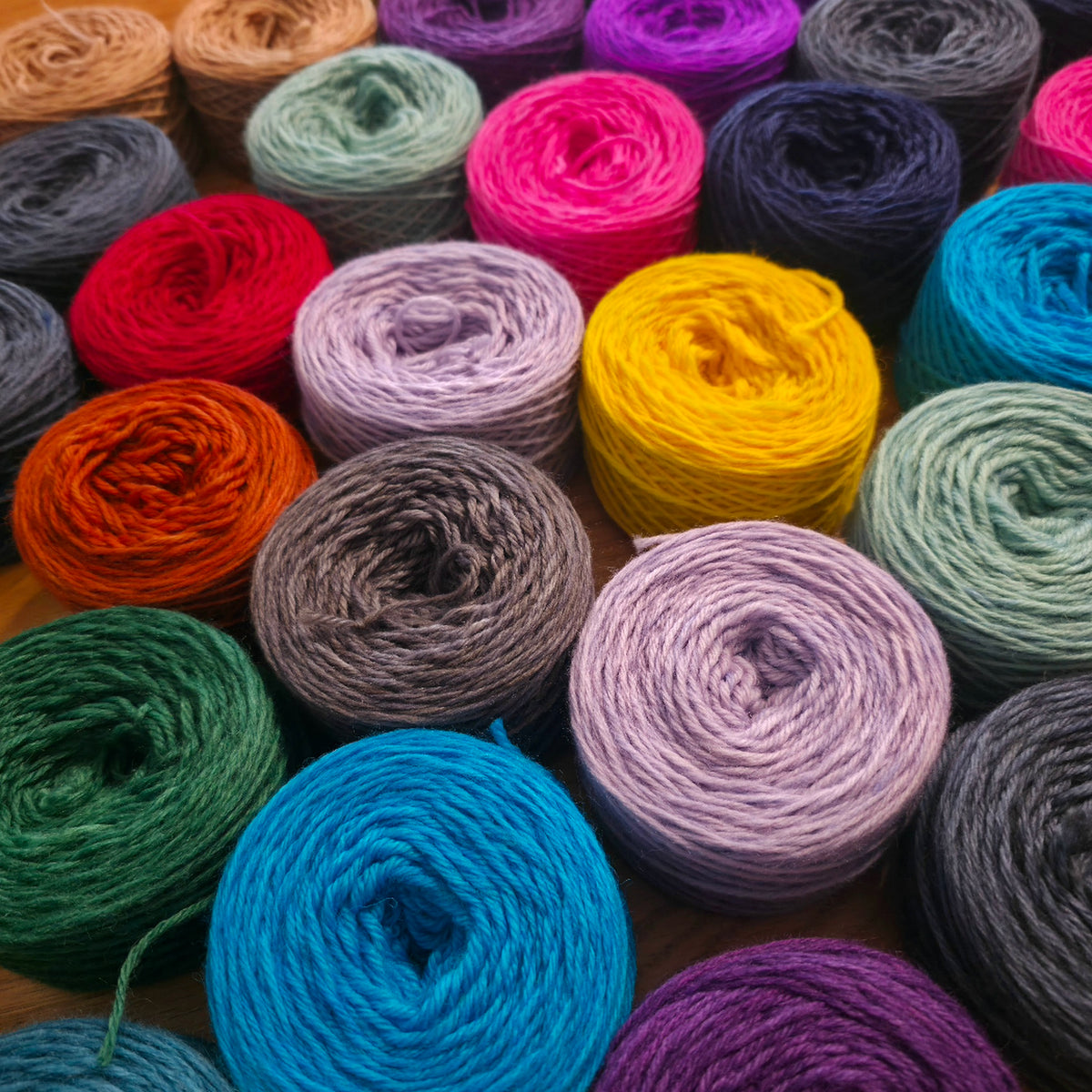
A kit to make Szal Tysiąca Pasów by Elżbieta Torenc (Lady in Yarn) using Martin's Lab Highland DK.
Each kit includes:
- 4 skeins (100 g) of Highland DK, one in each of colors C1–C4
- a printed copy of Generations or Pokolenia (if selected), a book curated by Martin's Lab with the Szal Tysiąca Pasów pattern and 12 more designs by various designers
- a Martin's Lab printed cotton project bag
- a sachet of no-rinse wool wash
The kit comes in the colors from the book. You can change them to any colors you like.
The pattern is inside the book.
From Ravelry pattern page:
Sizes:
One size
Span: 162 cm/64”
Depth: 67 cm/26,5”
Yarn:
4 skeins of Highland DK by Martin’s Lab (100% non superwash; 225 m/246 yds in 100 g)
Colors:
One-Eyed Mike, Leon, Blue Lagoon, Admiral
Needles:
US 7/5.5 mm or size needed to obtain gauge; circular needles 40–60 cm/32”
Notions:
A tapestry needle
Gauge:
13 sts and 20 rows = 10 cm/4” in brioche stitch pattern flat
on US 7/5.5 mm needles.
17 sts and 40 rows = 10 cm/4” in garter stitch flat
on US 7/5.5 mm needles.
A swatch is not required for this project, but differences in tension will affect the final size and yarn consumption.
Construction:
A Thousand Bands Shawl was created using Elizabeth Zimmermann’s method for a circular shawl: the Pi-shawl, adapted to fit the semicircle. It is worked flat from the top center. Stitches are added in increments of a specified number of rows, following the Pi-shawl method.
Envío en 1–4 días laborables.
Entrega: Polonia 1–2, UE 2–6 días laborables.
Envío gratuito desde 200 zł.
Política de envíos →
Teñido a mano en Polonia (UE) por:
Martin's Lab Sp. z o.o.
ul. Wojska Polskiego 2
87-152 Zamek Bierzgłowski, Poland
contact@martinslab.com